Choosing AV for Different Venue Types by Event Needs
Updated: 1 day ago
A room can look perfect for an event and still work against it if the sound, sightlines, or technical setup don’t fit. Choosing AV for different venue types starts with the event: a corporate presentation, wedding, concert, and hybrid gathering each place different demands on the room and its equipment.
It’s easy to focus on a venue’s appearance or capacity, but practical details matter just as much. This guide explains how to match audio, video, lighting, staging, and technical support to the event and space. For hybrid venues, stable internet, camera space, clear audio, and lighting that works both in person and on screen all help create a smooth experience.
Table of Contents
1. AV for Corporate, Concerts, Weddings & Fundraisers
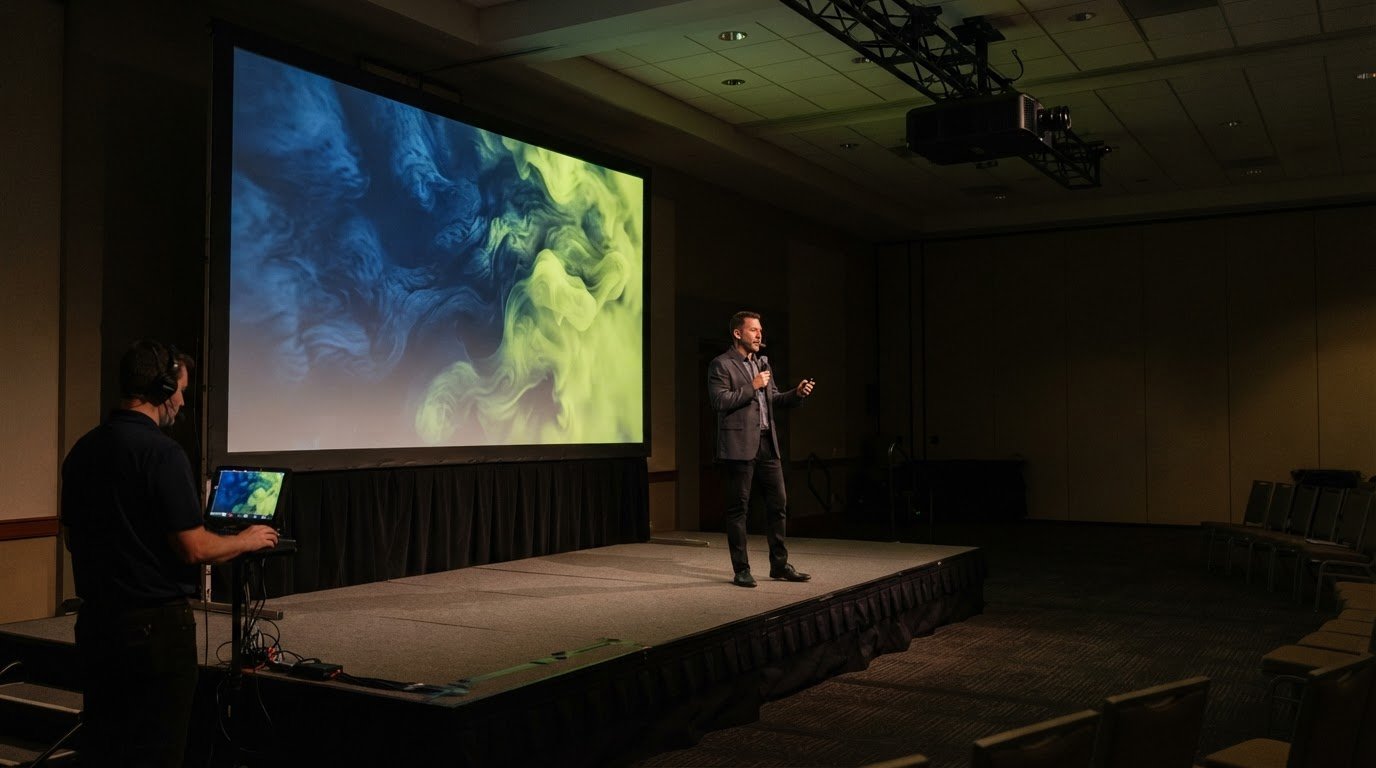
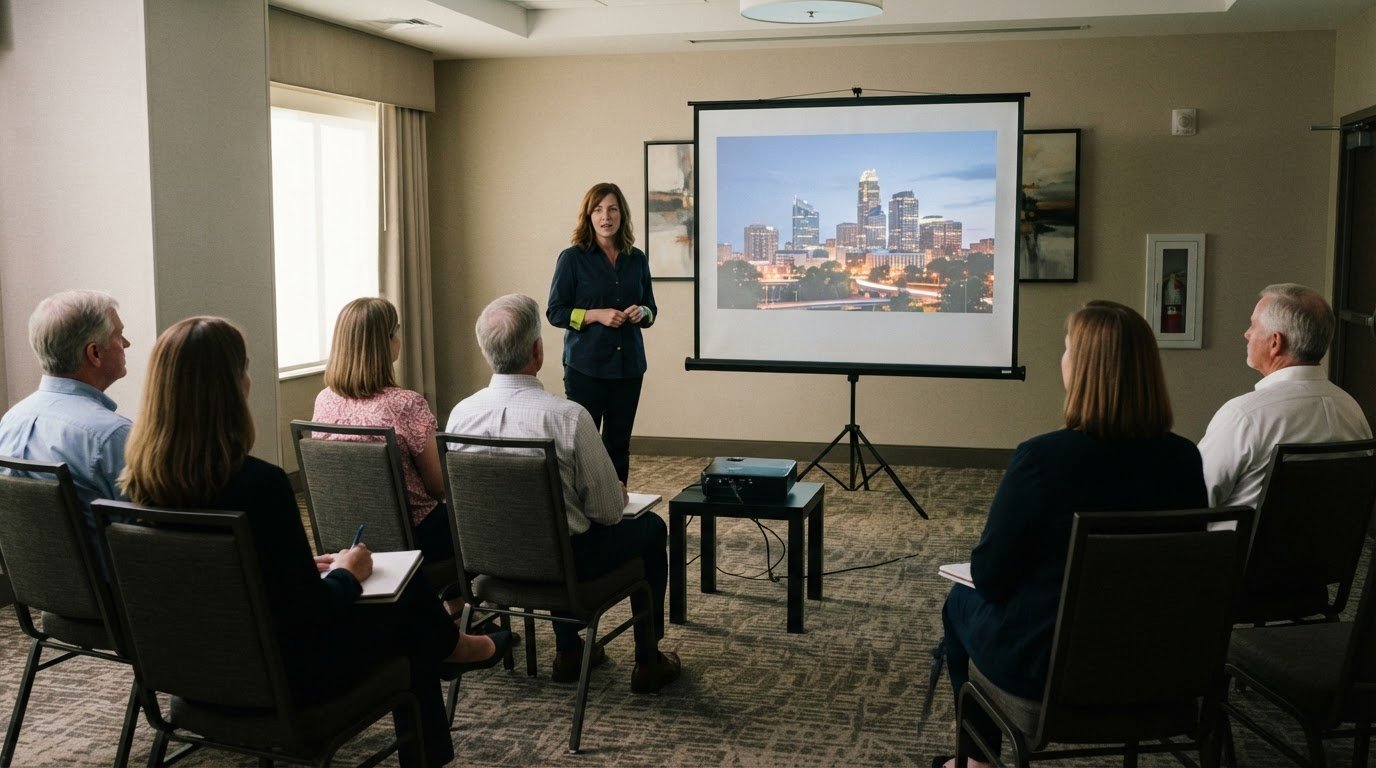
For corporate meeting rooms, an AV provider matches microphones, speakers, and screen placement to the room’s dimensions, layout, audience sightlines, and presentation format. A hybrid production also needs stable internet, camera space, clear audio, and lighting that works in person and on screen. Restaurants and inns can suit smaller events of up to around 80 people, though their room layouts may limit staging and branding.
Concerts need sound coverage, lighting, and screens suited to the venue and audience. Convention centers can accommodate staging and lighting rigs, while clubs may already have sound and lighting equipment. For weddings and fundraisers, clear speech, music, and photo slideshows help guide audio and screen choices. A restaurant lobby or entrance can also provide branding space beyond the event room.
Retail stores and showrooms need AV that supports product presentations and keeps displays visible without obstructing customer movement. A venue walkthrough helps position screens, audio, and lighting around the product layout. For houses of worship, the setup should account for speech, music, sightlines, and the room’s service format.
Accessibility requirements matter in assembly areas. According to the U.S. Department of Justice, assistive listening systems required in assembly areas must comply with Section 706. Assembly areas must provide assistive-listening receivers equal to 4 percent of the total number of seats, but no fewer than two, according to the U.S. Department of Justice. These are specific accessibility requirements; other building and safety requirements depend on the venue and production setup.
2. Club sound systems and intimate audience experiences
In a club, the audience sits close to performers, so even small changes in speaker placement can affect sound coverage. Low ceilings can intensify noise in a crowded room, while warehouse-style spaces may produce echoes. A site walkthrough lets the production team assess acoustics, sightlines, tables, and catering arrangements before placing equipment.
For a hotel event venue, the setup depends on the room’s dimensions, audience layout, and program. A meeting with speeches may need microphones and a projector screen, while a small performance needs sound that reaches guests without overwhelming conversation. Audience size and seating help determine whether one display provides clear views or multiple screens are needed.
Wired, wireless, and networked systems suit different venue conditions. Wired connections use physical cables, wireless equipment reduces cable runs, and networked systems carry signals over a venue’s network. A production team can assess existing microphones, projectors, screens, and sound systems, then match the setup to the event format and room.
In auditoriums and lecture halls, the provider evaluates stage position, seating sightlines, ceiling height, and soundproofing. Useful questions for an AV integrator include: where will each attendee see the screen, how will speakers be heard from the back rows, and which existing systems can support the event? For a club performance or conference, club event AV planning can align sound and visual coverage with the room.
3. Audio, video, lighting, staging, and technical support
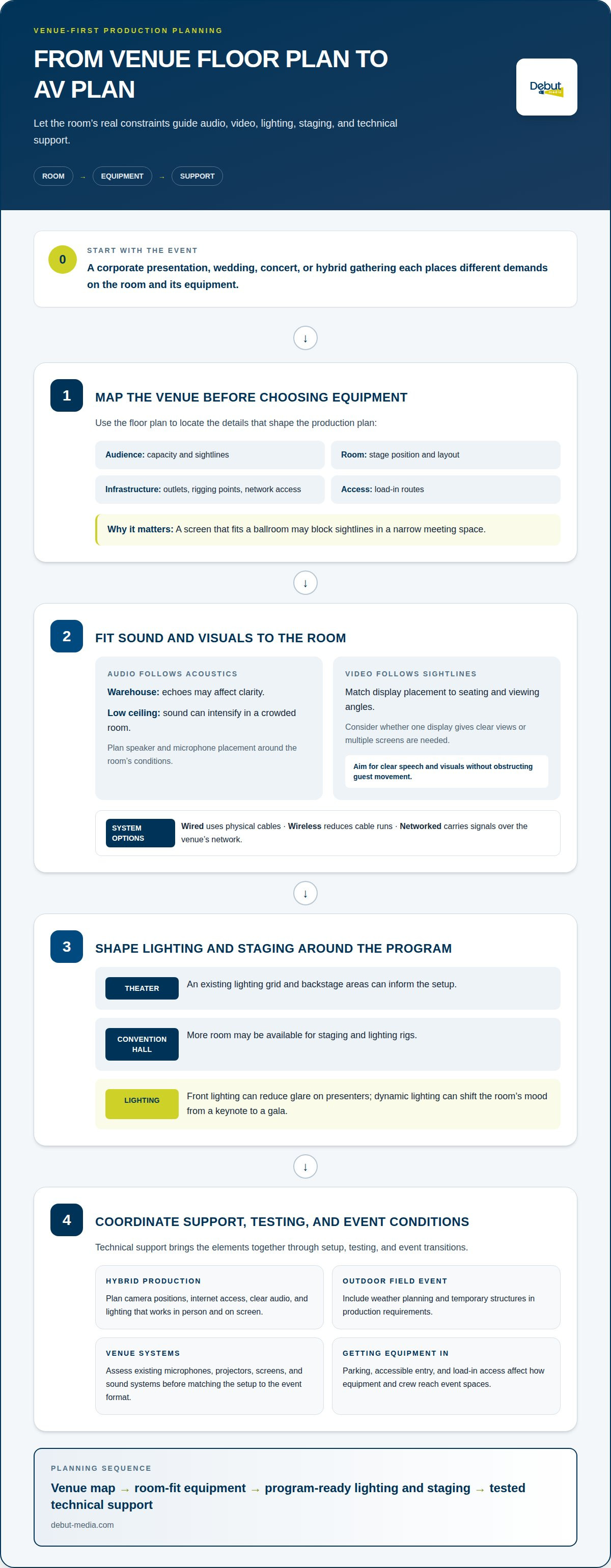
Start with the venue floor plan and map capacity, audience sightlines, stage position, outlets, rigging points, network access, and load-in routes. These details shape the production plan before equipment is selected. For example, a screen that fits a ballroom may block sightlines in a narrow meeting space. Choosing AV for different venue types means fitting each element to the room’s actual constraints.
Audio depends on acoustics as much as room size. A warehouse can create echoes, while low ceilings can intensify sound in a crowded room. The team can plan speaker and microphone placement around those conditions, then match video displays to seating and viewing angles. The goal is clear speech and visuals without obstructing guest movement.
Lighting should support both the event atmosphere and its practical needs. A theater may already have a lighting grid and backstage areas; a convention hall may offer more room for staging and lighting rigs. Front lighting can reduce glare on presenters, while dynamic lighting can shift the room’s mood from a keynote to a gala. These factors help guide choosing AV for different venue types.
Technical support brings these elements together through setup, testing, and event transitions. For a hybrid production, camera positions, internet access, clear audio, and on-screen lighting need to work as one system. Outdoor field events add weather planning and temporary structures to the production requirements. Parking, accessible entry, and load-in access also affect how equipment and crew reach event spaces.
Debut Media AV & Production
Debut Media’s AV and production services help align event AV with the venue, audience, and program. Turn to the team when room acoustics, screen placement, staging, or technical requirements make equipment choices difficult to coordinate.
For a corporate presentation, concert, wedding, or fundraiser, the right setup depends on what guests need to hear and see and how the space will be used. Debut Media’s Audio Visual Services and AV Corporate Event Production Services bring those needs together. Projector and Screen Rentals support presentation visuals, while Speaker and Microphone Rental addresses speech and sound requirements.
Share the event format, venue layout, and planned use of the space to help shape a practical AV approach. Contact Debut Media AV & Production to discuss your event.
Turn Your Venue Choice Into an AV Plan
Turn your venue choice into a clear production brief. Define what guests must hear and see, how the room will be used, and which technical elements shape the experience. This gives the AV plan a practical starting point and helps keep equipment, staging, and event format aligned.
Choosing AV for different venue types works best when those decisions follow the event’s purpose, not a generic equipment list. Debut Media AV & Production supports that planning through Audio Visual Services, Projector and Screen Rentals, and AV Corporate Event Production Services. Share your venue, program, and audience details to start a focused conversation.
Your event has a strong foundation when the technical plan fits the space and the experience you want guests to have.
Frequently Asked Questions
What Should You Watch Out for With Hybrid Venues?
For a hybrid venue, clarify how the in-room program connects with the remote audience. Map presenter positions, camera views, and transitions between speakers, slides, and live questions. Assign technical support to manage the handoffs and troubleshoot connection issues during the event. In Raleigh, Durham, or Chapel Hill, venue access and room configuration can also affect where production equipment fits.
What are the most common types of venues for events?
Common event venues include hotels, convention centers, restaurants, private dining rooms, bars, clubs, theaters, galleries, arenas, and outdoor fields. Each suits a different atmosphere and event format. A hotel meeting room may work for a corporate gathering, while a restaurant can suit a smaller reception. In Raleigh, Durham, and Chapel Hill, the best fit depends on the event’s purpose and the guest experience you want.
How can an AV provider choose a suitable setup for restaurants, bars, and nightclubs?
An AV provider should assess the room’s existing equipment, performance area, audience position, and how the space operates during service. In a restaurant, speakers need to support speeches or background music without disrupting dining and catering. A bar hosting an acoustic set may need a simpler setup than a nightclub with amplified performances. Account for reflective surfaces and speaker placement to help avoid uneven sound.
How do venue size, room acoustics, lighting, and seating affect AV selection?
Venue size and seating determine how far sound and visuals must reach, while room surfaces affect clarity and echo. Lighting influences screen visibility and whether presenters remain easy to see. A theater-style layout needs clear views toward the stage; banquet seating changes those sightlines. An AV plan considers these interactions together, so equipment placement supports the room’s actual use, not just its appearance when empty.