
Mastering Trade Show Logistics: 2026 Exhibitor Guide
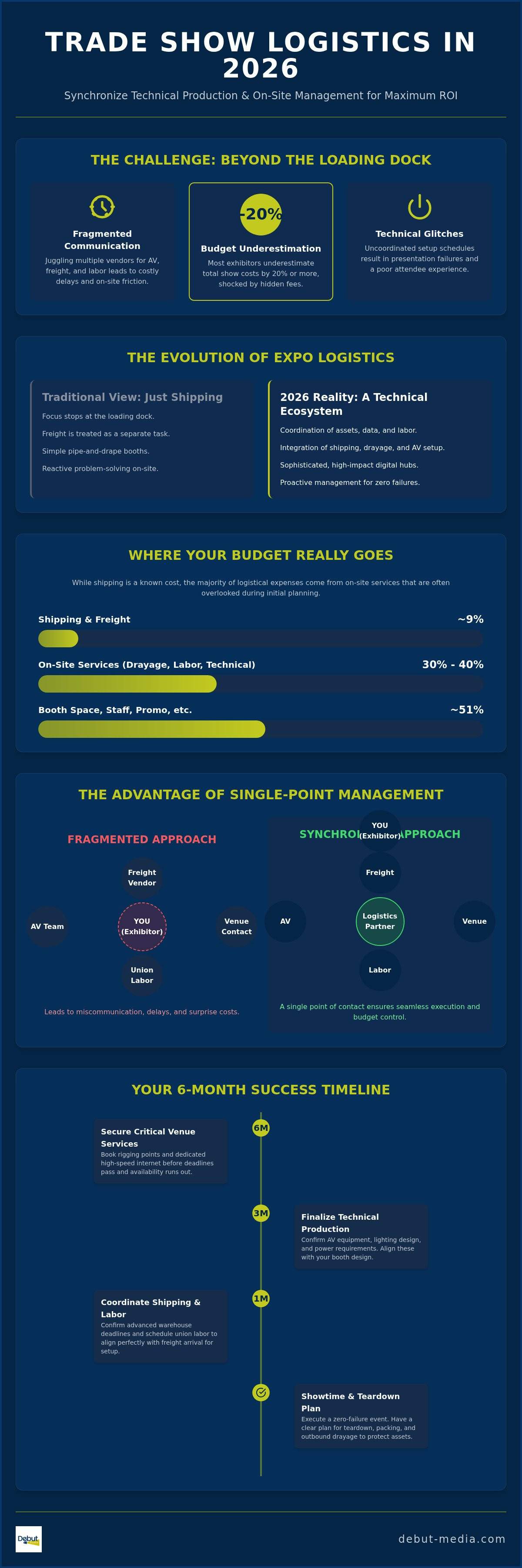
Did you know that most exhibitors underestimate their total trade show costs by 20% or more, often because they overlook the complex interplay between drayage, labor, and technical setup? It's exhausting to manage fragmented communication between multiple vendors while worrying about potential technical glitches during your live booth presentations. You've likely felt the pressure of coordinating sound, lighting, and freight, hoping every piece of the puzzle fits together perfectly before the expo doors open.
This guide will show you how to synchronize your technical production and on-site management through expert trade show logistical support to eliminate booth friction and maximize your ROI. We'll explore how a single point of contact provides a truly turnkey experience that protects your budget from hidden handling fees and shipping delays. You'll learn the essential strategies for 2026 to ensure zero technical failures and a seamless transition from the initial setup to the final teardown.
Table of Contents
What is Trade Show Logistical Support in 2026?
Traditional views of logistics often stop at the loading dock. However, effective trade show logistical support in 2026 represents a complete technical ecosystem. It's the disciplined coordination of physical assets, digital infrastructure, and on-site labor to ensure your brand's presence remains uninterrupted. Before evaluating your specific needs, understanding the foundational structure of What is a Trade Show? helps clarify why modern logistics have become so complex. It's no longer just about moving crates; it's about managing a high-stakes environment where every second of uptime counts toward your ROI.
In the current market, shipping accounts for roughly 9% of the total exhibit budget, but the logistical friction often occurs after the truck arrives. True support integrates freight, drayage, and on-site operations into a single workflow. This holistic approach is the only way to manage the 30 to 40% of show costs consumed by services beyond the physical booth itself. When you treat these elements as a unified system, you replace fragmented stress with a predictable, professional outcome.
The Evolution of Expo Logistics
The 2026 trade show floor is a far cry from the rows of simple pipe-and-drape booths of the past. Today, exhibitors are increasingly opting for smaller, regional, and industry-specific events that demand high-impact, data-backed engagement. This shift means your booth must function as a sophisticated digital hub. "Getting it there" is only 50% of the challenge. The remaining half involves the intricate synchronization of technical assets that must perform perfectly the moment the show floor opens. Logistics now encompasses the entire lifecycle of the event, from advance warehouse deadlines to the final drayage receipts.
Key Components of Technical Support
Modern trade show logistical support must address the "last mile" of technical integration. This includes securing power requirements, managing data rigging for high-speed internet, and ensuring your sound and lighting systems don't interfere with neighboring exhibits. With drayage rates at major venues like Las Vegas or Chicago ranging from $60 to $180 per hundredweight, there is no room for error in equipment handling.
A critical pillar of this process is a well-executed trade show booth AV setup. This isn't just about placing screens; it's about the technical production that powers your brand's message. Specialized lighting and sound are essential in a crowded hall to capture attention, and these components must be handled by specialists who understand the specific labor rules and union requirements of major convention cities. By integrating these technical needs into your broader logistical plan, you eliminate the glitches that typically plague fragmented teams.
Technical Logistical Planning: Bridging Shipping and Show-Time
Success on the expo floor depends on the "last mile" of your strategy. This is where your freight arrives at the venue and must be transformed into a functional marketing environment. Effective trade show logistical support ensures that your technical production schedule aligns perfectly with shipping arrivals. If your AV equipment arrives at 9:00 AM but your union labor isn't scheduled until noon, you're losing valuable setup time. Conversely, having a crew standing by without gear can lead to significant overages in labor costs, which typically range from $100 to $200 per hour in major convention cities.
Graphic design also plays a vital role in this logistical workflow. It isn't just about the visual appeal; it's about the physical production, packing, and installation sequence of your brand assets. High-impact graphics must be printed on durable materials that can withstand the rigors of transport and be mounted precisely on-site. Organizations like the International Exhibition Logistics Association emphasize that proper documentation and labeling of these assets are essential for avoiding delays during the drayage process.
The logistical cycle doesn't end when the show opens. Managing the equipment strike and return logistics is just as critical as the initial setup. A coordinated plan for dismantling the booth, repacking sensitive electronics, and managing the reverse freight process prevents damage and ensures your assets are ready for the next event. If you want to streamline this entire process, consider a partner that provides integrated expo management to handle every moving part.
Coordinating AV and Lighting Logistics
Your audio and video equipment must be ready for the first keynote without a second of downtime. This requires a logistical milestone known as the pre-show technical rehearsal. During this phase, every screen, speaker, and cable is tested under show conditions. Integrating specialized lighting for trade shows is equally important. These systems require specific power drops and rigging points that must be coordinated weeks in advance to ensure they drive traffic to your booth from the moment the floor opens.
Managing On-Site Technical Operation
Having dedicated technical staff on-site is a necessity, not a luxury. These experts provide rapid response logistics for any equipment troubleshooting, ensuring that a minor glitch doesn't become a major failure. Technical operation acts as the active bridge between initial setup and the ultimate success of your live presentation. By maintaining a constant presence, these specialists allow your sales team to focus on leads rather than fiddling with cables or reset buttons.
The Advantage of Single-Point Vendor Management
Managing a high-impact booth requires extreme precision. When you fragment your trade show logistical support across separate shipping, AV, and design firms, you create inevitable friction points. Who is responsible when a custom-built graphic doesn't fit the rented LED wall? The shipping carrier won't fix it, and the AV technician didn't design the frame. This "vendor gap" is where hidden costs and technical failures live. By consolidating these responsibilities under one roof, you eliminate the blame game and ensure every piece of the puzzle is designed to fit before it ever leaves the warehouse.
A unified partner acts as a stabilizing force in these complex environments. Debut Media positions itself as this central coordinator, taking on the role of the "fixer" who identifies potential hurdles weeks before the show floor opens. This approach offers significant cost-saving benefits. You avoid the overlapping labor fees and double-handling charges that often occur when multiple teams are tripping over each other during move-in. Centralized billing and project management mean your marketing team spends less time on paperwork and more time on high-level strategy.
Reducing Logistical Friction
Communication breakdowns are the leading cause of expo stress. In a multi-vendor setup, a single change in the show's schedule can trigger a domino effect of missed deadlines and overtime charges. A lead coordinator solves these problems before they ever reach your inbox. For a broader look at how this unified approach applies to your entire event calendar, you can explore our guide on corporate event logistics management. Having one partner who understands the sound, lighting, and freight requirements creates a seamless flow that fragmented teams simply can't match.
Efficiency in Booth Execution
Streamlining the timeline from initial design to the final strike requires a bird's-eye view of the entire operation. When your logistics partner is also your production partner, the transition from transport to installation is instantaneous. This efficiency provides deep emotional relief, replacing the frantic energy of setup day with the peace of mind that comes from expert oversight. To ensure you're hitting every milestone, it's helpful to consult a Logistical Checklist for Exhibitor Success. This structured framework, combined with a single point of contact, ensures your booth is a turnkey asset rather than a source of administrative burden.
A 2026 Logistical Checklist for Exhibitor Success
Planning for a major expo shouldn't be a reactive process. Most exhibitors underestimate their total costs by 20% or more because they fail to account for the complex interplay between venue regulations and technical requirements. Securing comprehensive trade show logistical support early allows you to lock in advance warehouse rates, which are typically 20% to 30% cheaper than shipping directly to the show site. By following a structured timeline, you transform your booth from a collection of crates into a synchronized marketing engine that's ready the moment the doors open.
A proactive approach also helps you manage the 8% to 18% of your program budget typically consumed by drayage. Understanding the marshaling yard procedures—the staging area where trucks wait before being called to the loading dock—is essential for avoiding detention fees and missed move-in windows. When every hour of union labor costs between $100 and $200, precision in your logistical timeline isn't just about organization; it's about protecting your bottom line.
Pre-Show Preparation (6 Months Out)
The six-month mark is the critical window for defining your technical footprint. This is when you must identify your needs for high-lumen projectors, large-format LED screens, and integrated audio systems. Early planning ensures that your graphic design concepts and booth layouts account for cable management and rigging points, preventing expensive on-site workarounds. It's also the ideal time to secure your trade show exhibitor logistics support partner. Having a single point of contact this early allows for a seamless transition from design to physical execution.
On-Site Execution and Post-Show Strike
Once you're on the show floor, the focus shifts to maintaining peak performance. Daily technical checks ensure that every digital asset is functioning correctly before attendees arrive. However, the most overlooked phase is the "strike"—the dismantling and load-out process after the expo ends. Efficient equipment strike services are vital to avoid expensive weekend or evening overtime labor rates, which can climb to 2x the standard cost. A professional team manages the repacking of sensitive AV gear and coordinates the marshaling of outbound freight, ensuring your assets are protected and your return shipping stays on schedule.
If you're ready to eliminate the stress of managing multiple vendors and complex timelines, explore how Debut Media can streamline your next event with our trade show support services.
Elevating Your Presence with Debut Media’s Expo Support
The complexity of the modern show floor requires more than just a delivery service. It demands a partner who understands that trade show logistical support is a technical discipline. When you integrate your AV rentals, lighting, and graphic design into a single managed workflow, you eliminate the friction that typically derails even the best-planned exhibits. This unified approach ensures that your message isn't lost in technical glitches or shipping delays. Instead of juggling five different vendors and their conflicting schedules, you gain the freedom to focus on your attendees and your ROI.
Our team acts as a stabilizing force throughout the entire process. We replace the stress of fragmented communication with the reliability of expert oversight. By serving as your master coordinator, we ensure that every projector, screen, and custom graphic is synchronized for maximum impact. This transition from "managing" a list of tasks to "leading" a high-performance exhibit is what defines a truly successful trade show presence in 2026.
Turnkey Solutions for Modern Exhibitors
Our in-house approach simplifies the planning process by keeping every technical and logistical detail under one roof. We've seen every possible scenario on the expo floor and have developed a methodical rhythm to handle them. For large-scale expos where the stakes are high, our "fixer" persona provides the emotional relief you need. We handle the union labor requirements, the marshaling yard wait times, and the technical rehearsals so you don't have to. This comprehensive oversight ensures that your booth is a turnkey asset, ready for engagement the moment the show begins.
Your Partner in Expo Success
Success on a national scale requires consistent quality across every venue. Whether you're exhibiting in a major hub like Las Vegas or a smaller regional center, our capability remains the same. We provide the steady hand and deep industry literacy needed to navigate complex venue regulations and labor rules. We invite you to transition away from the uncertainty of fragmented logistics and toward a partnership built on reliability and precision.
Contact Debut Media today for a comprehensive logistical and technical consultation. Let's review your 2026 trade show calendar and build a plan that ensures a seamless, high-impact experience at every event. You can reach our team at debut-media.com to start streamlining your next corporate expo.
Secure Your 2026 Expo Strategy
Mastering the complexities of the modern trade show floor requires a shift from fragmented management to total technical integration. You've learned how synchronizing your freight with your production schedule protects your budget from expensive labor overages and avoidable delays. By prioritizing a unified approach, you transform your booth from a source of administrative stress into a seamless marketing asset that performs perfectly from move-in to strike.
Reliable trade show logistical support is the foundation of a high-impact presence. When you consolidate your sound, lighting, and freight needs under a single expert coordinator, you eliminate the friction that often plagues multi-vendor setups. Our in-house technical production team and national service capability ensure consistent quality at every venue across the country. You can simplify your next expo with Debut Media’s Trade Show & Expo Support and experience the peace of mind that comes from a single point of contact for AV, lighting, and logistics. It's time to stop managing the chaos and start leading your brand to its most successful exhibition year yet.
Frequently Asked Questions
What is the difference between trade show shipping and logistical support?
Shipping is simply the transport of crates from your warehouse to the venue. Comprehensive trade show logistical support manages the entire lifecycle, including drayage, labor coordination, and technical production. It ensures that when your gear arrives, there's a team ready to install the AV and lighting immediately. This holistic approach prevents the common friction points that occur when shipping companies and booth technicians don't communicate.
How early should I start planning my trade show booth logistics?
You should ideally begin your logistical planning six months before the expo opens. This window allows you to secure technical equipment like high-lumen projectors and lock in early shipping rates. Most venues set advance warehouse deadlines two to three weeks before the event. Starting early ensures you stay ahead of these cutoffs and avoid the 20% to 30% price increase associated with direct-to-site shipping.
What technical logistics are often overlooked by first-time exhibitors?
First-time exhibitors often overlook the specific requirements for power drops, rigging points, and high-speed internet data lines. These technical assets must be ordered through the venue well in advance to avoid steep on-site surcharges. Additionally, failing to account for the weight of AV equipment can lead to unexpected drayage costs. A dedicated partner identifies these needs during the design phase to prevent last-minute technical failures.
Can a single vendor handle both my AV equipment and shipping logistics?
Yes, a single vendor can manage both your technical production and your shipping needs. This "one-stop" approach is the most efficient way to reduce administrative burden and eliminate communication gaps. By using one partner for trade show logistical support, you ensure that the people installing your lighting and sound are the same ones who managed the transport, resulting in a seamless, turnkey booth experience.
What is drayage, and how does it impact my logistical budget?
Drayage is the fee charged by the general contractor for moving your materials from the loading dock to your booth space. It's calculated based on weight, often ranging from $60 to $180 per hundredweight at major US venues. Because drayage can account for 8% to 18% of your total budget, it's vital to pack efficiently and use a logistics partner who understands how to minimize these handling costs.
How do I ensure my technical setup is ready for the expo floor opening?
You ensure readiness by scheduling a full technical rehearsal at least 24 hours before the show floor opens. During this time, your team should test every screen, audio feed, and lighting cue under show conditions. Performing daily technical checks each morning before attendees arrive is also essential. This proactive maintenance identifies potential glitches early, allowing your staff to focus entirely on lead generation rather than troubleshooting equipment.
What happens during the equipment strike phase of a trade show?
The strike phase involves the systematic dismantling of your booth and the repacking of all physical and technical assets. It's a high-speed process that begins the moment the expo officially closes. Efficient strike services are critical for avoiding expensive overtime union labor rates, which can be double the standard cost. A professional team coordinates the outbound freight immediately to ensure your equipment is safely returned or moved to the next show.


