
2026 Guide: Corporate Gala Stage Lighting Design
- Jul 26
- 11 min read
Updated: 4 days ago
Your corporate gala isn't just a meeting; it's a high-stakes broadcast where your brand is the lead actor. You've likely felt the stress of coordinating multiple AV vendors while worrying that your conference stage lighting design will look flat or uninspired on the final video recording. It's common to feel overwhelmed by technical jargon like "moving heads" or "wash" when you simply need a visually stunning environment that reflects your organization's prestige.
Professional lighting design exists to solve these exact frustrations by acting as the anchor for your entire attendee experience. This 2026 guide will teach you how to transform standard stages into high-impact brand experiences while eliminating the technical friction that often complicates large-scale productions. We'll walk through the latest advancements in AI-driven cues and the new IEC 63494-1:2026 safety standards, giving you the confidence to lead a seamless technical execution without the logistical headaches.
Table of Contents
The Strategic Value of Professional Stage Lighting Design
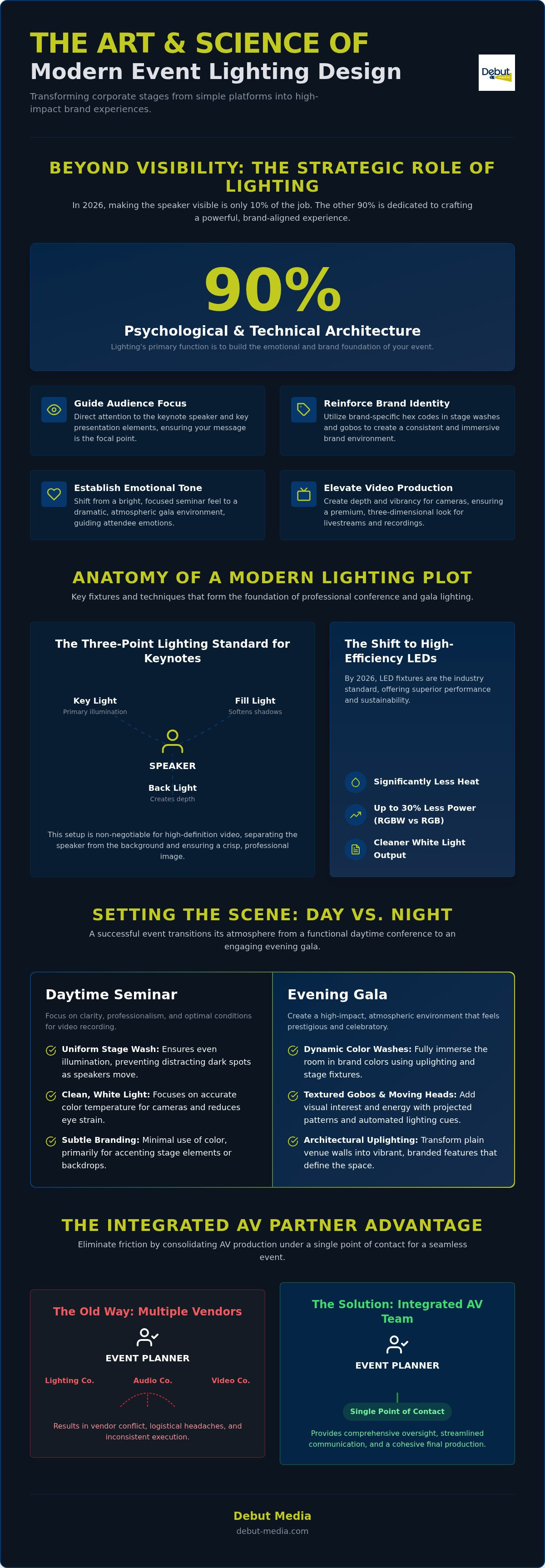
Professional lighting design is the intentional application of illumination to guide audience focus, reinforce brand identity, and establish a specific emotional tone. While many event planners assume lighting is simply about making the presenter visible, that task represents only about 10% of a lighting designer's job in 2026. The remaining 90% is dedicated to the psychological and technical architecture of the room. Without a plan built on the foundational principles of stage lighting, even the most expensive keynote speaker can feel diminished by the "flat" look of standard venue house lights.
Effective conference stage lighting design is especially critical for high-quality video recording and live streaming. Cameras perceive light differently than the human eye. They require specific color temperatures and intensities to capture depth and detail. Professional design ensures your digital audience sees a vibrant, three-dimensional environment rather than a washed-out, two-dimensional image. This technical precision eliminates the friction of poor post-production quality. It ensures your brand looks premium on every screen.
Anchoring Your Brand Through Color and Texture
We use brand-specific hex codes to create consistent stage washes that align perfectly with your corporate identity. This isn't just about choosing a generic color. It's about the exact shade that matches your logo across every fixture. We also utilize gobos, which are textured patterns projected onto surfaces, to add visual depth without the high cost of physical scenery. These elements create a visual anchor. They draw the audience's eyes toward the speaker, ensuring the most important part of your presentation remains the focal point.
Lighting as a Stabilizing Force in Production
A well-executed lighting plot acts as a stabilizing force that integrates with sound and video for a cohesive experience. When these elements are synchronized, the production feels intentional and professional. This integration is vital for reducing attendee eye strain during multi-day conferences. By managing brightness levels and subtle color shifts, we prevent the fatigue that often sets in during long sessions. Ultimately, professional lighting sets a tone of prestige. It justifies the event's ticket price and reinforces the message that your organization values quality and detail. We handle these moving parts so you can focus on your attendees.
Essential Components of a Modern Conference Lighting Plot
Modern conference stage lighting design has shifted almost entirely toward high-efficiency LED fixtures. By 2026, these units have replaced conventional tungsten bulbs in most professional settings. RGBW (Red, Green, Blue, White) LED setups are now the preferred choice because they can use up to 30% less power than older RGB models while providing a much cleaner white light for the stage. This transition isn't just about sustainability; it's about reliability. LEDs generate significantly less heat, which keeps your keynote speakers comfortable and prevents the technical glitches associated with overheating equipment.
A primary requirement for any corporate stage is a comprehensive "wash." This ensures even illumination across the entire presentation area, preventing dark spots as a presenter moves from one side of the stage to the other. To complement the wash, we use uplighting to transform standard venue walls into architectural features that reflect your brand's color palette. Understanding the core functions of stage lighting is the first step in moving beyond basic visibility toward a professional atmosphere. If you're feeling overwhelmed by these technical choices, partnering with an integrated AV team can simplify the planning process by providing a single point of contact for all your equipment needs.
The Three-Point Lighting Standard for Keynotes
We utilize the three-point lighting standard to ensure every presenter looks their best on camera. The "key light" acts as the primary source of illumination on the speaker's face, while the "fill light" softens harsh shadows to create a natural look. The final component is the "back light." This is essential for creating 3D depth in professional keynote technical support. By creating a subtle silhouette, the back light separates the speaker from the background, which is a non-negotiable requirement for high-definition live streams.
Intelligent Lighting and Moving Heads
Intelligent lighting fixtures, often called "moving heads," provide a level of flexibility that static lights cannot match. These automated units are perfect for award walk-ups and transitions during a gala. They allow us to change focus remotely, which is a lifesaver for last-minute stage adjustments or unscheduled speakers. Beyond the functional benefits, moving heads create a sense of movement and energy during high-impact moments. We use these fixtures to guide the audience's attention through a sequence of cues, ensuring the transition from a daytime seminar to an evening celebration feels seamless and intentional.
Stage Lighting for Galas vs. Standard Conferences
The requirements for conference stage lighting design change significantly when the sun goes down and the agenda shifts from education to inspiration. While a standard daytime seminar focuses on clarity and readability, a gala environment demands atmospheric storytelling. This transition is about more than just changing colors; it involves a fundamental shift in how we use light to guide the audience's emotional journey. We act as the master coordinator for these transitions, ensuring the technical setup supports the specific goals of each session without logistical friction.
Planning for a gala often requires a more complex technical operator than a standard presentation. During a fundraiser, the lighting professional must manage real-time cues for award winners, auction transitions, and high-energy milestones. Because of this complexity, stage lighting for galas typically involves a higher investment in both specialized equipment and expert labor. While standard presentation lighting is often static, gala lighting is dynamic, requiring a "fixer" on-site who can adapt to the live rhythm of the evening.
Atmospheric Lighting for Evening Fundraising
For evening events, we prioritize warm color temperatures to encourage networking and attendee comfort. We often use pin-spotting to highlight table centerpieces and auction items, which draws focus to the physical elements that drive fundraising. When a major donation is announced or an award winner takes the stage, we execute dynamic cues using moving heads to create a sense of celebration. These high-impact moments justify the event's prestige and keep your audience emotionally invested in the cause.
Functional Lighting for Educational Seminars
During daytime sessions, our primary goal is functional visibility. We ensure presentation screens and attendee notebooks remain easy to read by carefully controlling light spill. We also focus on reducing contrast ratios. This helps cameras capture both the speaker and the digital slides clearly for your archives or live stream. This same level of detail extends to the breakout session AV setup in smaller rooms. Even in a tight space, professional lighting prevents the "flat" look that can make educational content feel unengaging. We handle these technical moving parts so your speakers can focus on delivering their message.
Planning Your Lighting Logistics: From Load-In to Strike
Logistics are where your creative vision meets reality. A successful conference stage lighting design requires a methodical approach that starts weeks before the first equipment truck arrives at the loading dock. We manage this entire timeline to prevent the technical friction that occurs when planning is fragmented. Our process begins with a comprehensive venue site survey to identify power capabilities and rigging points. Once we understand the physical constraints of the room, we draft a lighting plot based on your speaker lineup and stage size. This ensures every fixture has a specific purpose and every cable has a designated path.
The execution phase involves managing the load-in, technical rehearsals, and live show operation. Our team remains on-site to handle real-time adjustments, ensuring the lighting remains perfect as the room temperature changes or the schedule shifts. After the final applause, we provide professional event equipment strike services for a clean and efficient venue exit. This turnkey approach means you aren't left managing the "blame game" between the venue and multiple AV vendors.
Venue Coordination and Power Requirements
Professional AV teams must coordinate closely with venue house electricians to ensure safety and compliance. As of 2026, the National Electrical Code (NEC) requires that all commercial electrical equipment must have an arc flash label with specific safety information. We verify these details during our site survey so your event isn't delayed by unexpected inspections. We also manage the distinction between house power and portable power distribution, using the latest IEC 63494-1:2026 standard connectors to maintain a stable electrical foundation for your entire production. Safety cables are always used as a secondary suspension for any overhead rigging, which is a non-negotiable industry standard for public ballrooms.
The Importance of the Technical Rehearsal
The technical rehearsal is where we fine-tune the timing of every cue. We test lighting transitions against walk-up music and video clips to ensure the experience feels seamless for the audience. This is also the time when we adjust intensities for different skin tones and hair colors in your speaker lineup, ensuring everyone looks their best on the live stream. Precise timing is especially critical for corporate awards ceremony AV, where lighting must react instantly to the host's announcements. If you want to ensure your next event is technically flawless from load-in to strike, contact our production specialists today to discuss your custom lighting plot.
Partnering with a Full-Service AV Production Team
Managing the various moving parts of a large-scale event can quickly become overwhelming for even the most seasoned planners. When you fragment your production between different vendors, you risk the "blame game" where the lighting team blames the power provider, and the video team blames the lighting. A turnkey partner eliminates this friction by providing a single point of accountability. This streamlined approach ensures that your conference stage lighting design is perfectly integrated with your audio and visual elements from the very first site survey.
The peace of mind that comes from a turnkey solution cannot be overstated. By working with a dedicated team that provides in-house technical support rather than relying solely on a revolving door of freelance-only crews, you gain a partner invested in your long-term success. Our specialists have seen every possible scenario and have a plan ready for each one. This expert oversight allows you to step back from the technical minutiae and focus on your attendees, knowing every detail is handled by a master coordinator.
Eliminating Logistical Friction in Event Planning
Consolidating your lighting, sound, and video under one project manager drastically reduces administrative overhead. Instead of juggling multiple contracts, insurance certificates, and invoices, you deal with a singular, organized entity. This cohesion is why Debut Media acts as a stabilizing force for planners who feel overwhelmed by the technical demands of a gala or conference. We simplify the complex, replacing fragmented communication with clear, methodical updates. This efficiency doesn't just save time; it ensures that every technical choice supports the overall goals of your event.
Custom Design for High-Impact Corporate Results
We move beyond "standard" equipment packages to deliver bespoke lighting solutions tailored to your specific brand. A partner who understands both the technical side of production and the strategic side of meeting planning is a rare asset. We don't just provide gear; we provide a vision that elevates your stage and justifies your event's prestige. This partnership-based approach means we work alongside you to solve problems before they occur. Ready to elevate your stage? Contact Debut Media for a custom production quote and let us handle the moving parts for you.
Secure Your Brand's Visual Impact
Success in modern event planning depends on your ability to balance technical complexity with a seamless attendee experience. You've learned that effective conference stage lighting design is more than just a utility; it's a strategic tool that anchors your brand and prevents the "flat" look of standard venue house lights. By understanding the shift from functional daytime sessions to atmospheric evening galas, you can ensure your production remains engaging from the opening keynote to the final fundraiser.
Managing these moving parts doesn't have to be a source of logistical friction. We act as your stabilizing force, providing a single point of contact for all your AV needs and expert technical operation through every phase of the project. Whether you need national service coverage for a multi-city conference or a professional equipment strike that ensures a clean venue exit, our team is ready to assist. Streamline your next event with Debut Media's turnkey production services and gain the peace of mind that comes from expert oversight. We're here to help you turn your technical vision into a flawlessly executed reality.
Frequently Asked Questions
What is the most important factor in conference stage lighting design?
The most important factor in conference stage lighting design is the intentional direction of audience focus toward the presenter or the central message. While creating a beautiful environment is a priority, the lighting must first provide functional visibility that eliminates shadows and prevents eye strain. A professional design ensures the speaker stands out against the background, creating a visual hierarchy that keeps attendees engaged throughout the duration of the program.
How much power does a professional stage lighting rig require?
Power requirements depend on the scale of your rig, but modern LED systems are significantly more efficient than older technology. A basic setup might only require a few standard 20-amp circuits, while a full gala production typically needs a dedicated 100-amp or 200-amp three-phase power drop. We manage these technical details by coordinating with venue electricians to ensure all distribution meets the latest 2026 safety standards.
Can we use the venue's house lights for our corporate gala?
You shouldn't rely on venue house lights for a corporate gala because they lack the control and intensity needed for a professional production. These lights are designed for general room visibility and often create a flat, uninspired look on camera. Professional stage lighting allows for the dimming of the audience area while highlighting the stage, which is necessary for directing focus and establishing a premium brand atmosphere.
What is a 'gobo' and how is it used in corporate lighting?
A gobo is a custom-cut stencil placed inside a lighting fixture to project a logo or textured pattern onto a surface. We use them in corporate settings to add visual depth to backdrops or to reinforce brand identity by projecting logos onto the stage floor. This technique provides a high-impact visual element that is much more flexible and cost-effective than building physical scenery or custom sets.
How does lighting design impact the quality of our event video?
Professional conference stage lighting design directly dictates the quality of your event video by providing the specific color temperatures cameras need to resolve detail. Without it, sensors often struggle with low light, resulting in grainy footage and inaccurate skin tones. High-quality lighting creates the three-dimensional depth required for premium live streams, ensuring your digital audience receives the same high-prestige experience as those attending in person.
What is the difference between a wash and a spot in stage lighting?
A wash provides a broad, even distribution of light across the entire stage, while a spot delivers a concentrated beam to highlight a specific individual. We use washes to ensure presenters have the freedom to move without walking into shadows. Spots are typically utilized for award walk-ups or to draw immediate attention to a specific feature, such as a product reveal or a keynote speaker's entrance.
How early should we book a lighting design team for our 2026 conference?
Booking your lighting design team 6 to 12 months in advance is recommended to ensure equipment availability and adequate planning time. This lead time allows for a detailed site survey and the drafting of a custom lighting plot that aligns with your specific agenda. Early coordination also helps us integrate lighting with your audio and video needs, preventing the logistical friction that often occurs with last-minute planning.
What are the safety requirements for rigging lighting over an audience?
Safety requirements for overhead rigging include the non-negotiable use of secondary suspension, such as steel safety cables for every fixture. All rigging points must be verified for weight capacity by the venue, and the installation must be performed by certified technicians. Adhering to these standards, along with the 2026 NEC regulations for power distribution, ensures a secure environment for your attendees and protects your organization from liability.


